Seeing Skin More Clearly – Why Inclusive Skin Knowledge Matters

October brings both Black History Month and World Black Beauty Innovation Week – an opportunity to celebrate innovation, representation and the growing recognition that skin knowledge must reflect the diversity of the people we support.
For many years, clinical education, textbooks and professional resources have predominantly shown skin conditions on lighter skin tones. This has shaped the language used to describe the skin and the visual signs practitioners are taught to recognise.
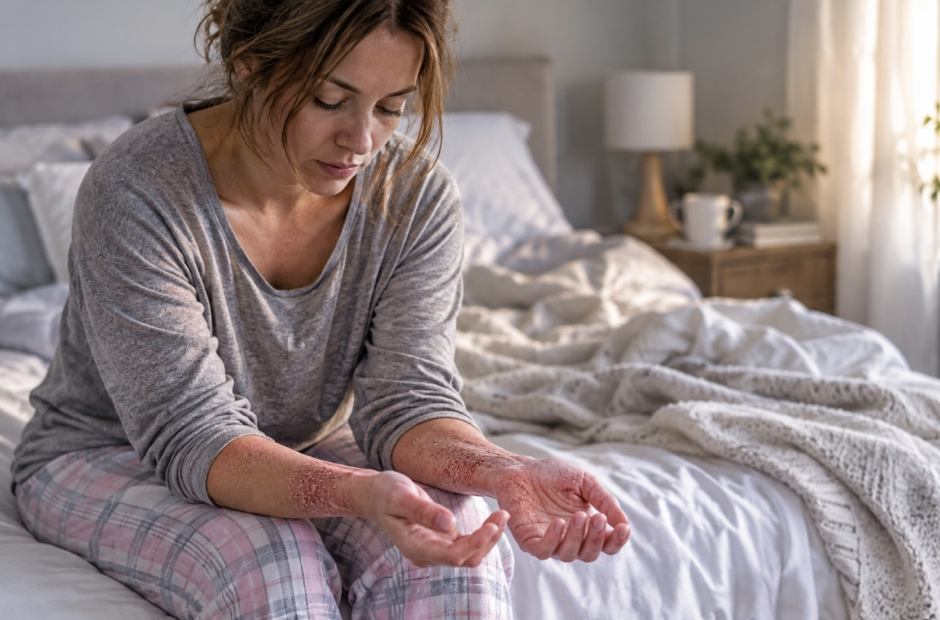
Redness is perhaps the clearest example. Inflammation is frequently described as erythema, a term closely associated with red or pink skin. On darker skin tones, however, inflammation may appear purple, brown, grey or simply darker than the surrounding skin. In some cases, the colour change may be subtle even when other signs or symptoms are significant.
The clinical sign has not disappeared. It may simply be less readily recognised when our learning has taught us to look primarily for redness.
Looking beyond redness
Colour remains an important part of skin assessment, but it should not be considered in isolation.
Where a colour change is difficult to distinguish, assessment may also include:
- comparison with the individual’s unaffected or usual skin tone;
- changes in warmth;
- swelling or changes in contour;
- tenderness, discomfort, itching or pain;
- changes in texture;
- scaling, dryness or thickening; and
- the individual’s own account of what feels or looks different.
The individual may notice a change before it is immediately apparent to somebody else. Listening to what they have observed is therefore not an optional addition to the visual assessment, it is an important source of clinical information.
Bruising can present a similar challenge. It may not display the familiar sequence of colours commonly illustrated on lighter skin and may initially appear as tenderness, swelling, subtle darkening or a change in undertone. This does not mean that bruising is absent or that the individual’s symptoms are less significant.
When assessment tools rely upon colour
The limitations of traditional skin descriptions can also affect formal assessment.
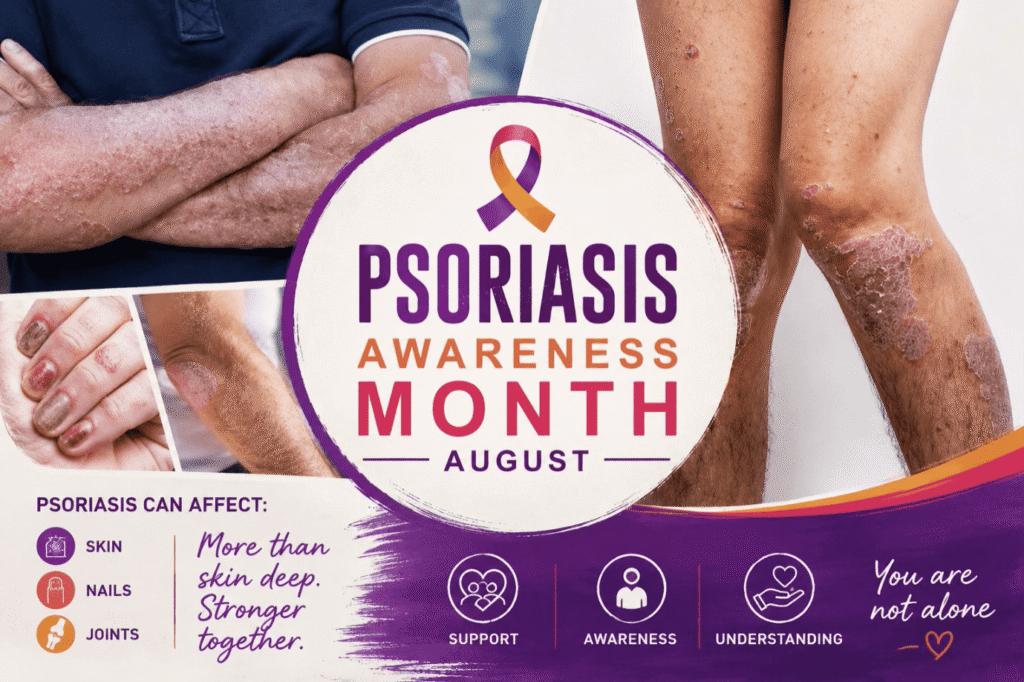
Scoring systems used in dermatology, including the Eczema Area and Severity Index (EASI) and the Psoriasis Area and Severity Index (PASI), include an assessment of erythema. When redness is less visually apparent, there is a risk that the severity of inflammation may be underestimated.
Guidance for using EASI advises practitioners to take underlying skin pigmentation into account. Increasing the erythema score by one grade in darker skin tones has been suggested where this is necessary to avoid underestimating inflammation. However, this is guidance associated with a particular assessment tool rather than a rule to be applied automatically to every person or every skin assessment.
The wider lesson is important: a scoring system does not replace professional observation and judgement. Practitioners need to understand both how to use a tool and where its limitations may lie.
Skin tone is not one uniform category
People from every racial and ethnic background have a wide range of skin tones and undertones. Terms such as darker skin tones or deeper skin tones describe part of this broad and varied spectrum. They do not refer to one colour, one undertone, one ethnicity or one shared experience.
This is why assessment should begin with the individual rather than an assumption based upon a label. The relevant comparison is often not with an image in a textbook, but with that person’s usual skin tone and the surrounding unaffected skin.
Why this matters in skin camouflage
Inclusive skin knowledge is particularly important in skin camouflage practice.
The practitioner is not simply selecting a product described as light, medium or dark. An effective colour match requires attention to depth of colour, undertone and the way the skin responds under different lighting conditions. The appearance of a scar or skin condition may also be influenced by hypopigmentation, hyperpigmentation, inflammation, vascular changes, surface shine and texture.
In deeper skin tones, even a relatively small area of hypopigmentation may create a striking contrast. Hyperpigmentation may also appear very different according to the person’s baseline skin tone and undertone. Understanding these distinctions supports a more accurate colour match and more realistic discussion about what skin camouflage may achieve.
It also helps the practitioner recognise when camouflage should be postponed, for example, where the skin remains inflamed, unstable, broken or requires further clinical assessment.
Representation influences practice
A lack of diverse clinical imagery does more than leave a gap in a textbook. It can influence whether a condition is recognised, how its severity is interpreted and whether an individual feels that their concerns have been heard.
Inclusive education is not about learning a separate version of dermatology for particular racial groups. It is about developing a fuller understanding of how skin signs may present across the people practitioners already encounter.
This includes broadening educational images, questioning colour-based terminology and becoming comfortable with saying, “This may not look as I was originally taught to expect.”
World Black Beauty Innovation Week and Black History Month provide a valuable opportunity to recognise the experiences and contributions of Black people and professionals. They can also prompt a wider and lasting commitment: ensuring that knowledge, imagery, services and product choices reflect the full spectrum of skin tones throughout the year.
Because seeing skin clearly requires more than eyesight. It requires knowledge, attentive observation and a willingness to listen to the person whose skin it is.